Literary & Scientific Analysis
Ciência ao Natural
An Archaeology of Portuguese Scientific Thought
Analysis of 675 posts published by Luís Azevedo Rodrigues between 2004 and 2017 — thirteen years of science outreach, palaeontology, evolution and science communication.
Overview
Thirteen Years of Scientific Writing
The Ciência ao Natural blog is a microcosm of the evolution of science outreach in Portugal in the Web 2.0 era. The analysis of 675 posts reveals five distinct phases, each with its own rhythm, tone and thematic focus.
Publication Volume
Posts per Year (2004–2017)
Essential Reading
8 Most Representative Posts
Selected for diversity of theme, quality of writing and historical significance within the blog's thirteen-year arc — one post for each major turning point.

The Miner's Canary or the Sixth Extinction
The very first post of the blog: a dense, literary essay on mass extinctions and the fragility of life on Earth.
9 Myths and Confusions about Dinosaurs and Palaeontology
One of the most-read posts of the early phase: a systematic debunking of popular misconceptions about dinosaurs and fossils.

Punctuated Equilibrium
A concise and elegant explanation of Gould and Eldredge's theory of punctuated equilibrium — a perfect example of the author's ability to explain complex ideas in a few lines.

Whales with Legs, The Origin of Species and Fossil Birds
A tour de force through three of the most spectacular examples of macroevolution: the terrestrial ancestors of whales, Darwin's landmark book, and the fossil record of bird origins.

Fossils — History and Popular Myths
A rich cultural history of how fossils have been interpreted across civilisations — from ancient myths to modern science.

Disparity and Biodiversity in Dinosaurs
Written in response to a request from a Brazilian journalist, this post explains a Nature Communications study on dinosaur morphology — a showcase of the author's mature voice as a science communicator.

Urban Geology and Palaeontology — Books
The announcement of three bilingual books on the Urban Geology and Palaeontology of Lagos, Tavira and Faro — the culmination of years of fieldwork and the blog's final thematic pivot.

SciCom PT 2013: Some Ideas on Science Communication
A reflective post following the national science communication congress, sharing a vision for the future of science outreach in Portugal. One of the most personal texts in the archive.
Origins & Roots
Long, dense scientific chronicles
The blog begins as a repository of articles published in Portuguese newspapers (Diário de Aveiro, O Primeiro de Janeiro). Texts are long, dense and strictly palaeontological. The voice is that of the classic science communicator — neutral, academic, rigorous.
Characteristics
Representative excerpt
The Miner's Canary or the Sixth Extinction
23 October 2004
«About 10 years ago, I was wandering through a bookshop in Edinburgh when I found a book by one of the most important palaeontologists and evolutionists still alive. «The Miner's Canary» describes the history of life on Earth through its mass extinctions…»
Dominant Words
Annual Volume in This Phase
Intense Expansion
Daily blog, short and varied posts
The blog explodes in activity. In 2008, 230 posts are published — almost one per day. The author discovers the interactive and visual potential of the medium. Texts shorten drastically. The blog wins the Super Blog Awards prize in 2007.
Super Blog Awards Prize (2007)
Characteristics
Representative excerpt
Sea Monsters and Scientific Rigour
24 July 2007
««Don't miss this opportunity to meet ancestral marine reptiles and the latest theories about the causes that may have led to their extinction!» — so announces the exhibition. But does scientific rigour accompany communicative enthusiasm?»
Dominant Words
Annual Volume in This Phase
Peak & Consolidation
Visual series, humour and chronicles
The golden age of recurring series: «Caption This», «Bioforms», «End of Cycle». The author crosses science with art, music and photography. 2009 is the Darwin Year — Evolution dominates the discourse. The poetic/literary tone reaches its historical peak.
Characteristics
Representative excerpt
Cities Without People I
6 January 2009
«Nobody sleeps in the sky. Nobody, nobody. Nobody sleeps. The creatures of the moon smell and circle their cabins. They will come alive, and they will not let you sleep. You will not sleep, and you yourself will not be able to sleep…»
Dominant Words
Annual Volume in This Phase
Transition
Reflection on science and communication
The pace slows but depth increases. The author becomes Director of the Centro Ciência Viva de Lagos (2012) and launches the podcast «Ciência Viva À Conversa». The blog becomes a platform for reflection on the practice of science communication. Personal voice (1st person) reaches 2.4%.
Director of Centro Ciência Viva de Lagos (2012) + Podcast
Characteristics
Representative excerpt
Disparity and Biodiversity in Dinosaurs
4 May 2012
«This text was written following contact from journalist Marco Túlio Pires of the Brazilian magazine Veja, who wanted my comment on the Nature Communications article about dinosaur morphology…»
Dominant Words
Annual Volume in This Phase
Professional Maturity
Portfolio and urban geology
The blog transforms into an archive of major projects. Texts are the longest in the blog's entire history (813 words in 2016). The focus shifts to Urban Geology of the Algarve and to reflection on science communication at a national level.
Publication of 3 Urban Geology books (2016)
Characteristics
Representative excerpt
Urban Geology and Palaeontology — Books
23 February 2016
«After several years, three bilingual books — in Portuguese and English — that I co-authored on the Urban Geology and Palaeontology of three Portuguese cities — Lagos, Tavira and Faro — are now published.»
Dominant Words
Annual Volume in This Phase
Style Analysis
How the Writing Evolved
Four metrics reveal the transformation of writing style over 13 years: vocabulary richness, sentence length, use of the first person and dominant tone.
Vocabulary Richness (TTR)
Vocabulary Diversity
High TTR = short, varied posts · Low TTR = long, repetitive texts
Subjectivity
First Person Usage (%)
Personal voice markers as % of total words
Dominant Tone
Scientific vs. Poetic vs. Social
Density of tone markers as % of total words per year
- Scientific
- Poetic / Literary
- Social / Political
Vocabulary Richness in an Inverted «U»
The TTR describes a perfect curve: it starts moderate in the early long texts, peaks in 2009 (0.88) in the short and varied posts, and falls again in the long, mature texts of the final phase.
Poetic Peak in 2009–2010
The poetic/literary tone explodes between 2008 and 2011. This is the phase of chronicles on «Cities Without People», visual series and the crossover between science, art and music.
The Personal Voice Emerges in 2011
First-person usage rises from 0.4% to 2.4–2.8% between 2011 and 2014, coinciding with the appointment as Director of the Centro Ciência Viva. The author asserts himself as an active agent.
Thematic Evolution
From Palaeontology to Urban Geology
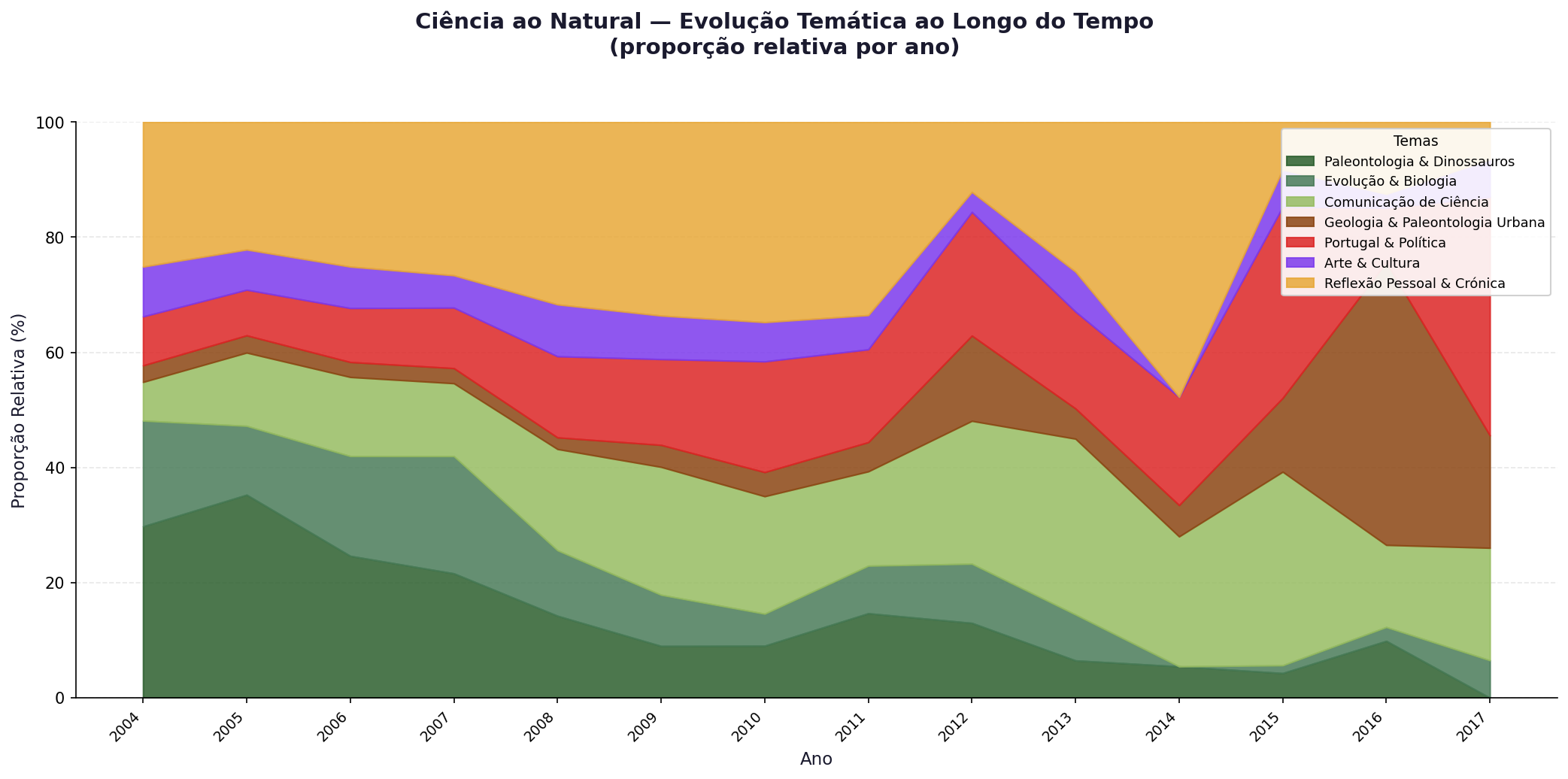
The dominant vocabulary in each period reveals a profound transformation in the author's interests and professional identity.
Thematic Evolution Chart
Relative Proportion per Year
Recurring Series
The Art of Serialisation
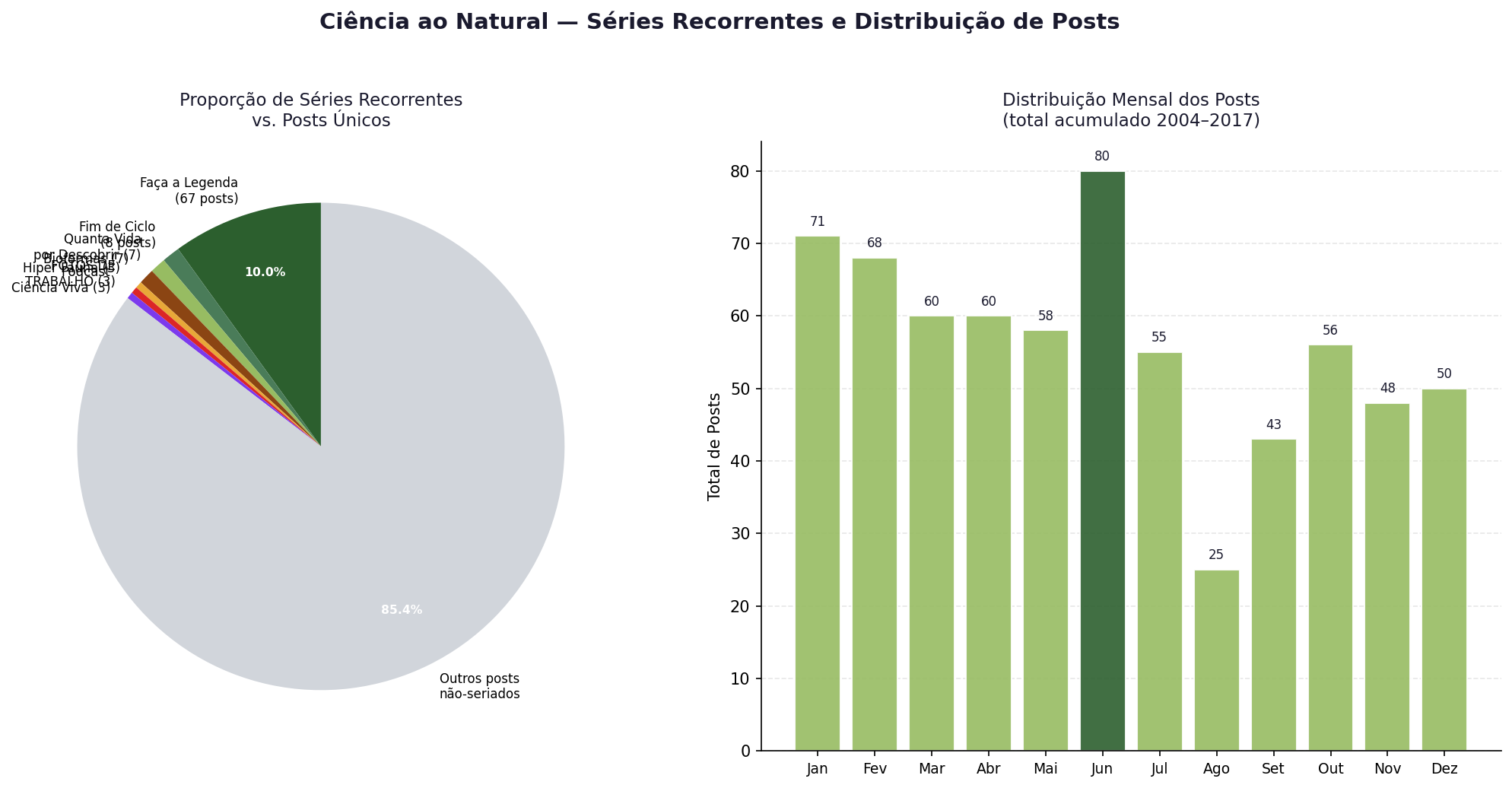
One of the most distinctive marks of Luís Azevedo Rodrigues' style is the creation of recurring thematic series. The most emblematic, «Caption This», posted an intriguing image and challenged readers to comment — anticipating the logic of modern social media.
Caption This
Intriguing image + reader challenge
End of Cycle
End-of-period reflections
How Much Life to Discover
Biodiversity and species
Bioforms
Biological forms as art
Hyper Fauna
Fauna in enlarged perspective
Field Work Photos
Field photography record
Ciência Viva Podcast
Podcast episodes
Series Distribution
Archive Image
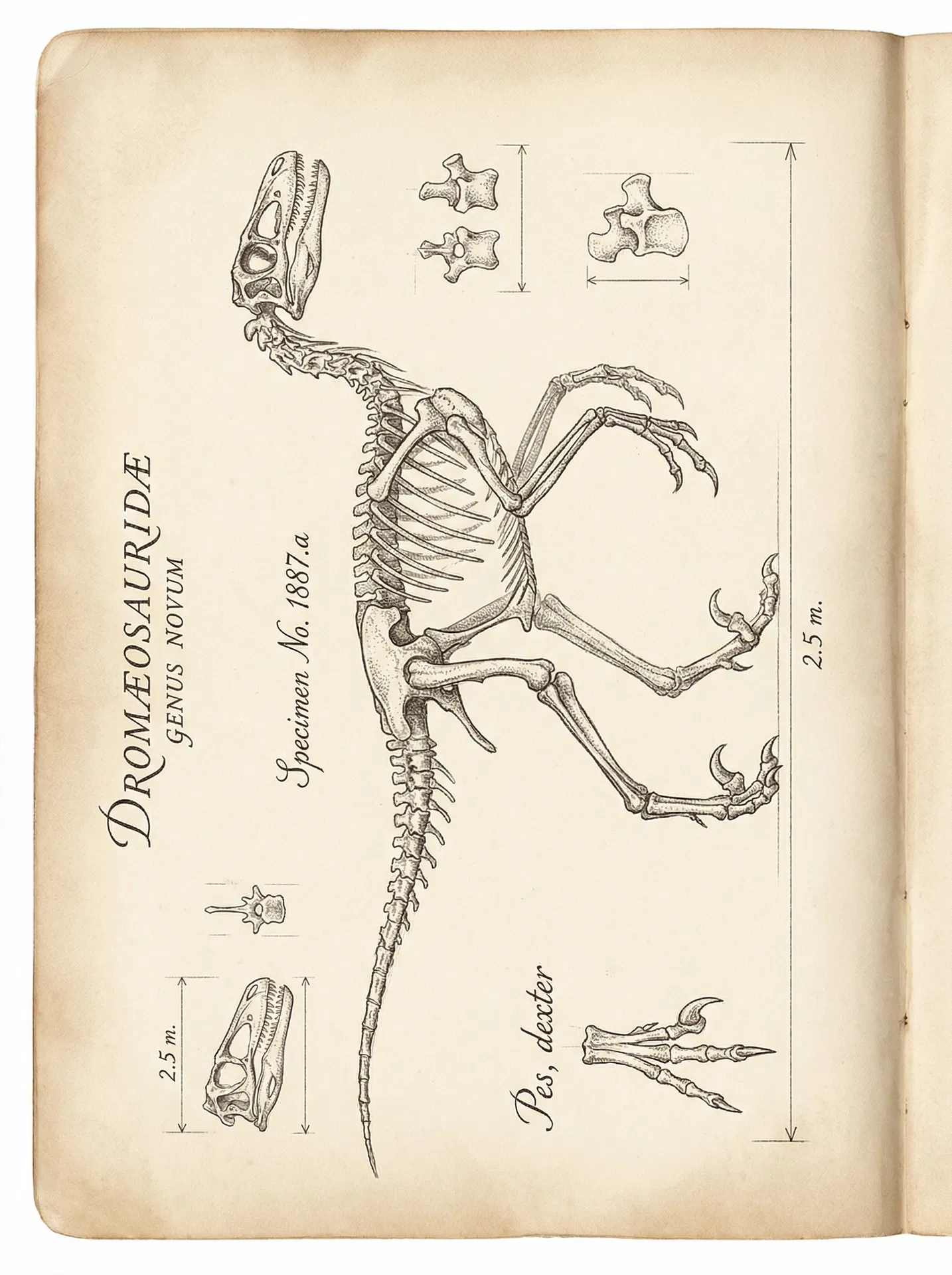
19th-century scientific illustration — the blog's aesthetic
Thematic Groups
Browse by Category
The blog is organised into thematic categories, each representing a distinct intellectual thread in the author's work. Click any category to explore the original posts on the blog.
Emotional Palaeontology
Paleontologia Emocional
Personal reflections on the practice and passion of palaeontology — the emotional and human side of fossil science.
Spot the Difference
Descubra as diferenças
The blog's most popular series: readers are challenged to spot differences between two similar images, blending science with visual play.
For Study and Work
Pro studio et labore
Posts on the author's professional life: fieldwork, conferences, publications and institutional activities.
Bio-Derivatives
Bioderivados
The intersection of biology with art, culture and everyday life — from biological forms in design to evolutionary metaphors in literature.
How Much Life to Discover
Quanta Vida por descobrir
Celebrating the extraordinary diversity of life on Earth — species discoveries, biodiversity and the wonder of natural history.
Morphological Evolution
Evolução Morfológica
Deep dives into the evolution of body plans, anatomical structures and the macroevolutionary patterns that shape life's diversity.
Dinosaurs
Dinossauros
The blog's founding passion: news, discoveries, myths and science about the most iconic group of prehistoric animals.
Existential Doubts
Dúvidas existenciais
Philosophical and reflective posts on science, society and the human condition — where palaeontology meets existential thought.
Behaviour
Comportamento
Animal behaviour, ethology and the evolutionary roots of behaviour — from dinosaur social life to modern animal cognition.
Bioforms
Bioformas
A visual series celebrating the aesthetic beauty of biological forms — organisms as living sculptures, photographed and presented as art.
Caption This
Faça a legenda
The most interactive series of the blog: an intriguing image is posted and readers are challenged to write the best caption.
Geological Time
Tempo Geológico
Exploring deep time — the immensity of geological and evolutionary timescales, and what they reveal about life's history on Earth.
Museum Stories
Histórias de Museus
Behind-the-scenes stories from natural history museums around the world — collections, exhibitions and the people who curate them.
Urban Geology & Palaeontology
Geologia e Paleontologia Urbanas
The author's final thematic focus: reading the geological and palaeontological history of cities through their buildings, pavements and stones.
Conclusion
The Thread Running Through Thirteen Years
The Ciência ao Natural archive is a microcosm of the evolution of science outreach in Portugal in the Web 2.0 era. Luís Azevedo Rodrigues began by using the blog as a repository of long newspaper articles.
He quickly grasped the interactive, fast and visual potential of the medium, transforming the blog into a vibrant, near-daily space of intersection between palaeontology, evolutionary biology, art and humour.
As his career evolved towards managing science spaces and larger-scale projects, the blog adapted. It ceased to be a diary of curiosities and became a professional portfolio and a space for reflection on the very practice of communicating science.
«Science — whether found in a dinosaur fossil millions of years old, or in the paving stone of an Algarve street — is an intrinsic part of human culture.»